Young Driver Safety - How Parents Can Help
The risks associated with inexperienced drivers are well documented; but there are some ways that parents can play a bigger role in helping their teens become safer drivers in their early years on the road.
Supervised practice
The more practice your young driver gets, the more prepared they will be when potentially dangerous situations arise. And if you are there to supervise that practice, so much the better.
There’s currently no requirement for drivers to be supervised after they’ve passed their test, but that doesn’t mean your child won’t still benefit from having a parent’s guidance in that first year or so after qualifying.
Talk to your teen about the risks associated with new drivers and set aside time each week for a supervised session. If they’re not too keen on having mum or dad sitting with them after they’ve qualified, suggest that in return you provide support towards the cost of their petrol or insurance. If they don’t yet have their own car, make it a condition of you allowing them to drive yours.
Ground rules
There are many factors which might contribute to an accident…
- Loss of concentration
- Not judging a situation correctly
By setting some ground rules with your child, you can help to minimise the risk of other factors!
Contributory factors to accidents you can help influence:
- Driving later in the day, especially between 8.00pm and 4.00am
- Carrying young passengers
- The driver has consumed any amount of alcohol
Asking your child to agree to limit their driving at night and not to carry more than one or two young passengers at a time may reduce the risk of an accident, as will an absolute agreement never to drink alcohol when they are driving home.
Support
In exchange for agreeing to the rules, your young driver has to know that they have your full support. This might be a financial incentive to help with the initial costs of driving or insurance, but more importantly they have to know that you are always there to support them, even when things go a bit wrong.
Setting a good example
Ever wondered how many hours your child sat behind you in the car as they grew up? You can be sure they were influenced by your own driving. What did they learn?
Here are just a few bad habits you might want to correct if you want to set a good example to your youngster.
- Accelerating and driving too fast
- Braking too hard and too late
- Bad manners and “road rage”
- Talking or texting on the phone while driving
- Not wearing a seatbelt
- Driving with one hand on the wheel
Young Driver Danger Zones
Inexperience
You can’t get away from the fact that every new driver has to start somewhere, and until they’ve built up experience of a wide range of situations on the road, their judgment, perception of danger and reactions make them more vulnerable.
ROSPA estimates that one in five crashes are caused by drivers not correctly judging the speed or path of another person or driver. Young, inexperienced drivers are understandably prone to this kind of error of judgement.
Spend as much time as you can driving with your child. Newly qualified drivers are often less sure of themselves than they’d like you to believe. Faced with new situations they haven’t experienced with a driving instructor, such as night-time driving or motorways, they might welcome extra supervised sessions with you.
Poor weather conditions could be a new experience for them too; take the opportunity to give them the benefit of your experience in a wide variety of different situations.
Teenage passengers
Peer pressure can encourage bad driving. Young drivers may show off to teenage passengers, who may themselves cause distractions.
The more passengers in the car, the higher the risk. Where there are two or more passengers, the risk of driver fatality in an accident is five times higher than when driving alone.
Explain the danger to your child. Make them understand the risk and ask them to agree a limit to the number of friends they carry as passengers, at least until they have more experience driving.
Driving at night
Across all age groups, the crash risk of night-time driving is higher than during daylight hours, but even more so with teenagers. Several factors could be at play:
- Visibility is restricted at night
- As there is less traffic on the roads, a driver may feel that they do not have to pay as much attention. Drivers may also feel they can drive faster on quieter roads
- Young people are more likely to be driving for recreational purposes during these hours, so the probability of drink and drugs being involved is higher.
Distractions
Passengers are not the only distraction to young drivers. Activities such as using a phone to text or call, changing the stereo settings, fiddling with a sat nav, and eating and drinking all contribute to loss of attention behind the wheel.
The chances of you being in the car with your child on every trip are remote, but when you are, make them ignore these distractions. Set a good example by not falling foul of these bad habits yourself – and don’t underestimate the influence your own driving has on your children as they are growing up.
Over-confidence
Alongside those anxious, newly qualified drivers who welcome advice, are the over-confident ones who think they know it all. They drive too fast, they tail-gate other cars, overtake when it’s not safe, become aggressive when other drivers make mistakes and pay more attention to gadgets in the car or their phone than the road. Their judgement is impaired, but their lack of experience means they often don’t know it until it’s too late.
Losing control of a vehicle accounts for one-third of all fatal car crashes and around 400 people a year a killed in accidents where speed was a contributory factor for the prevailing road conditions.
This type of young driver is less likely to be swayed by well-meaning parental lectures on safe driving. Talk to them about the risks, and the consequences of speeding, reckless driving, or getting pulled over by the police.
Other danger zones
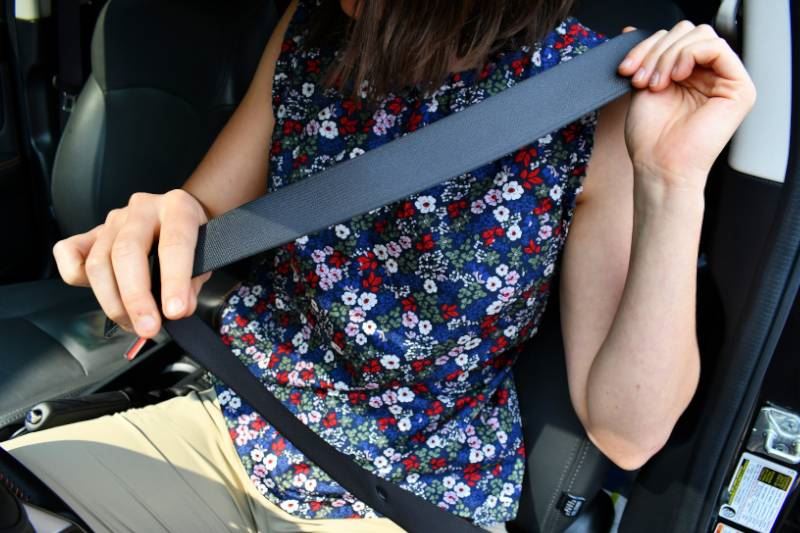
Not using seatbelts is a less common occurrence these days – in the U.K. we’re mostly programmed to automatically belt up when we get into the car, but in the rare instance that a young driver forgets, their risk of significant injury in an accident is much greater. ROSPA estimate that 300 lives a year could be saved if we all wore seatbelts all the time.
Tiredness kills. Remember that old road safety campaign? It’s still a valid message – you shouldn’t drive when you’re tired – but young drivers often don’t realise that their responses are impaired, or lack the judgment not to drive even if they do realise.
Drink and drugs
Even after many years of road safety campaigning, young drivers still get caught drinking and driving, or driving under the influence of drugs. Around 280 people a year die in crashes where someone was over the drink-drive limit. If lack of experience, judgement and perception of danger is a risk under normal circumstances, add to this the dulled responses of a drunk driver and the danger is very real.
Avoid the danger
As with other dangers, parents should not only talk to their children about the risks, they should also set a good example by adopting good driving habits themselves.
Young Drivers’ Shocking Lack of Car Knowledge
In an age where our cars are largely run by electronics and computer systems, how important is it to have any knowledge of what’s under the bonnet? Can we do anything about it even if we do know the names of all the constituent car parts?
The DVLA in the UK certainly think a basic level of knowledge is important and as such include “show me, tell me” questions in the driving test regarding the workings of a car engine, safety issues, and vehicle checks.
Drivers are ultimately responsible for the roadworthiness of their car. Yes, many parts of a modern car are sealed and can only be checked by a qualified mechanic, but there are a number of checks that are good practice to carry out to make driving safer. These include oil levels, coolant and tyre pressure. Tyres in particular may not be indicated by a dashboard light and can result in fines if found to be faulty or worn.
It also makes good financial sense to carry out routine checks, as it’s often cheaper to fix a problem if it’s spotted early.
It may not seem like it sometimes, but your teenager probably does listen to you! Use your influence to proactively support them when they are gaining that much-needed experience behind the wheel. It could make all the difference to their safety.
Related articles